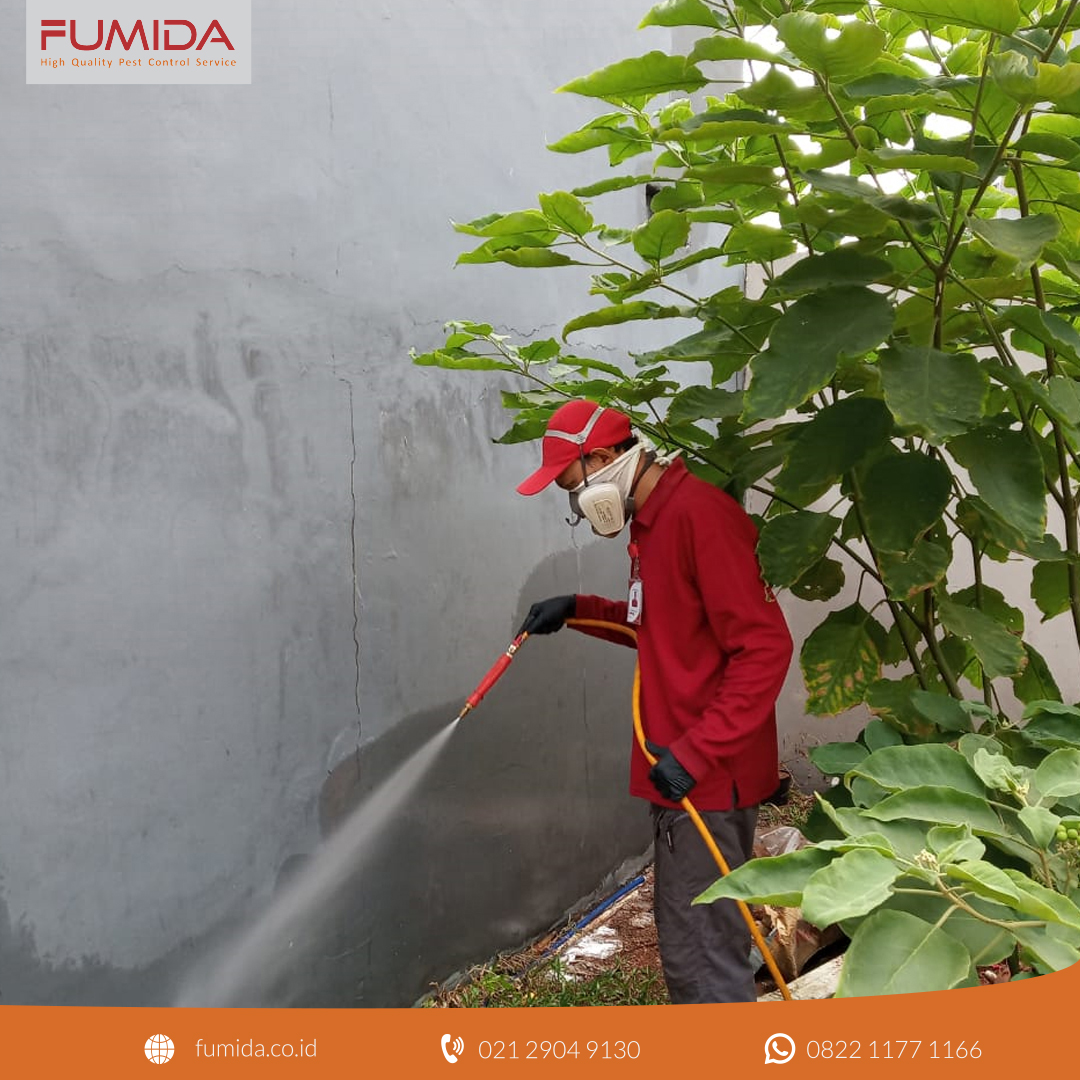
20 Definitive Reasons For Deciding On Anti-Termite Control Services In Jakarta
Wiki Article
Jakarta Homes: Subterranean Termite Defense
Walk through any Jakarta neighborhood--Menteng, Kebayoran Baru, Kelapa Gading--and you will see them: door frames swollen at the base, fine brown lines climbing foundation walls, tiny pinprick holes in skirting boards. Many homeowners think it's just wear and tear. This isn't. It is evidence that a termite colony from the subterranean has already entered the structure and is consuming food 24 all day and seven days a week and is fueled by Jakarta's constant humidity, and also the unintentional invitation extended by the latest construction techniques. It is important to disregard the recommendations in imported pest-control guides and use strategies that are specifically designed for Jakarta's particular species, soil, climate and soil.
1. The Door Frame and Window The virus that is in the window and door frame
The termites of Jakarta don't enter concrete slabs. The termites are able to enter the structure where wood meets brickwork at a height that is accessible to humans. The majority of reported attacks have occurred on door jambs or window sills. Companies that employ injection rods or drills to attack the floor slab, are fighting a losing battle. The real battlefield lies below waist level where moisture condenses and seeps in the untreated wood.
2. Four Species, One City, Different Rules
Jakarta is home to at least four distinct species of subterranean termites. The different species of termites differ in their behavior. Coptotermes is the most aggressive structural invader. Microtermes insperatus is numerically dominant but less destructive. Macrotermes gilvus builds visible mounds in gardens. Coptotermes curvignathus prefers live trees but will migrate into houses when wood runs out. If exterminators cannot distinguish them and are not able to select the right bait.
3. The Six-Week Truth
There is no legitimate way to eliminate colony over night. It takes between 8 and 10 weeks for the chlorfluazuron poison to be distributed throughout the colony. Pest control companies that promise 24 hour removal are selling poisons that kill the foragers but leave the reproductive nucleus in the underground.
4. Above-Ground Stations Rewrite Everything
The bait stations around the perimeter could be helpful in monitoring the situation, but are useless if it has already begun inside the building. Above-ground stations, small bait cartridges that are secured to mud tubes force toxicants into the colony’s active highway. Jakarta exterminators won't be selling treatment if they don't own above-ground units.
5. The Soil Moisture Trap
The clayey and silty soils in Jakarta retain water. Termites don't only tolerate conditions when soil moisture exceeds 22 percent. They prefer these conditions. Anti-termite treatments that use chemicals without evaluating drainage, downspout discharge and the overspray of irrigation are applying costly poisons to the environment which termites love to call home.
6. Pine Stake Forensics
Before recommending treatment, expert exterminators in Jakarta are able to bury Pinus merkusii stakes which are not treated at the perimeter. Thirty days later, they take and weigh the stakes. A weight loss of greater than 30% is a sign of high stress foraging and warrants an intervention. This is not guesswork; it is calibrated entomology accessible to any professional service provider.
7. Green Belt Hazard
Nine Jakarta sub-districts carry extreme termite risk: Penjaringan, Pademangan, Palmerah, Kebayoran Baru, Jagakarsa, Pesanggrahan, Kramatjati, Duren Sawit, and Cipayung. These areas share one characteristic--significant remaining green space that sustains parent colonies. The homes in these areas need periodic inspections and regular baiting. Annual contracts are not sufficient.
8. It is dangerous to build a brand new house.
Termites change their behavior in the face of urbanization. Termites nest in the fill dirt that is imported to new housing developments. They forage along utility trenches and colonize landscapes with irrigation that developers have installed. A newly constructed BSD home, also known as a Bekasi home is not an empty canvas. Termites began to colonize it on the same day that the first plantation of shrubs.
9. Short-Rotation Teak Isn't Your Grandfather’s Teak
The silica and oil in traditional Javanese teak, harvested after sixty years old, discourage termites. Modern plantation-grown teak isn't. Most of the "teak" that is used in Jakarta's modern-day housing is chemically undeveloped but botanically the same. When homeowners pay premiums for termite-resistant timber and receive it, they usually get termite-resistant wood.
10. The Mud Tube Forensics Rule
Don't scrape or sand the dirt tub without first examining what it shows. The tube's origin point is the point that allows soil to enter. The diameter correlates with the age of the colony. The location of the tube--kitchen, bathroom and exterior walls--defines which water source is sustaining the infestation. A tube that is removed without reading it is similar to deleting a video surveillance without having watched it.
It's a conclusion.
Jakarta homes are not at risk of being invaded. The homes are occupied by residents who have adapted themselves to the particular conditions of this city. The species is well-known. The attack patterns are mapped. The treatment timelines have been assessed. The only question is whether or not homeowners and anti-termite service providers will adopt the protocols Jakarta subterranean Termites researchers have validated and abandon the mythology of generic pest control. The research is there. It's your choice whether or not to employ it. Read the most popular jasa anti rayap for blog info including pest control harga, pest control jakarta selatan, jasa basmi rayap, anti rayap kayu, penyebab rayap di lemari, jasa rayap, rayap kayu, jasa pembasmi hama, pengendalian hama, rayap pekerja and more.

Soil Treatment Protocols For Termites In Greater Jakarta
The trench is dug. The rod is inserted. The chemical injection is completed. The technician moves 60 centimeters and repeats. This routine, that is performed throughout Greater Jakarta tens of thousand of times a year is considered to be a science that has been proven by homeowners as well as exterminators. It's not. It's just a matter of tradition disguised as a protocol. Treatment of soil to combat subterranean pests was developed in temperate zones with soils with different textures, moisture regimes or species. Trench-and-drench when applied to Jakarta's silty, compacted clay and Coptotermesgestroi behavior foraging behavior, yields results that range from temporary suppression to complete futility. Greater Jakarta must have soil treatment protocols calibrated according to Greater Jakarta's requirements. The following 10 tips will help distinguish chemical application which merely creates bill lines, and treatment that actually blocks termites.
1. Chemical Mobility Is Determined by Soil Texture
The urban soils of Jakarta are mostly composed of silty clay. Particle size is small. Organic material is very low. Porosity is minimal. It is important to note that liquid termiticides aren't distributed radially in the same way as they would in loamy-sands. Instead, they build up within the trench, travel in a preferred path, and pool in cracks. Exterminators, who assume uniformity in their distribution, are lulled. There is no need for faith post-application soil core samples.
2. The 300 to 500mm Moisture Belt Determines Placement
Roof eaves protect the soil adjacent to the wall of foundation. It gets little rain. It is still drier than garden soil that is open. Termites focus their hunting in a narrow area that is 300 to 500 millimeters (or less) away from the structure. It's close enough to the structure for them to get to the foundation yet sufficiently far away to be able to take in water. Treatment of soil applied flush to the wall does not reach this area. The drip line is where the trench should be put in.
3. The Half-Life of Hydrolysis can be measured in weeks, not months.
Hydrolysis degrades fipronil and imidacloprid. Moisture and temperature increase the rate of hydrolysis. Jakarta's shallow-depth soil temperature ranges between 28 and 32 degrees Celsius. The majority of the time, soil moisture exceeds 20 percent during the wet seasons. Half-lifes of chemicals are affected by this. Bekasi is about four months away from Ohio, where products with a 12-month declared efficacy is still in efficacy. Warranty documents must be able to reflect this. Most do not.
4. Vertical Barriers need to be disrupted horizontally
Termites can get into the soil via the interface between the foundation and the soil. Chemicals can only be employed at the soil-foundation junction to form a vertical barrier. Rod injection from the surface deposits chemicals at depth, but leaves the uppermost 5-10 centimeters untreated unless the rod is withdrawn slowly, thereby treating the entire column. Exterminators who pull rods instantly after they have drilled them to depth are only treating the subsoil.
5. C-Organic Binds and Inactivates
Soil organic matter adsorbs non-repellent termiticides and reduces the amount available for termite uptake. Jakarta's city soils contain little organic carbon. But landscape planting beds near foundations receive plenty of compost and potting mixes. These areas require higher soil treatment rates to break the binding effect of organic matter. Standard rates for labeling are based on mineral soils that are not modified.
6. Pre-treatment Moisture Audits Are Non-Negotiable
A soil water content of more than 22% could provide a desirable habitat. Soil with a content of less than 10% hampers hunting. Exterminators that inject terminicide before taking measurements of soil moisture apply chemicals to unspecified conditions. The moisture-meter is priced at 200 million rupees. Ten times that amount is spent on the initial re-treatment when an improperly applied condition is involved.
7. The volume of the trench should be equal to the label rate, not linear meters
Indonesian soil treatment estimates generally are quoted per foundation linear meter. Label instructions specify quantity and concentration per unit of area or per square meter, at the specified dimensions. Quotes that are given per meter and don't check the width or depth of the trench are compliance documents and not treatments. The amount of chemicals required for a 15cmx15cm trench is about half the volume needed to treat a trench that is 30 cmx30cm deep. The price difference is rarely reflective of this.
8. Rodding Versus Trenching: A Specific Selection of Species
Coptotermes gestroi hunts through the soil's upper 15cm to 20cm. Microtermes reaches moisture during dry conditions by utilizing vertical shafts foraging deeper. Rod injection deposits chemical at depth, intercepting Microtermes. Mixing and trenching chemical in the upper profile will block Coptotermes. Species identification must precede protocol selection. Exterminators who use the same soil treatment technique for every account are mismatched to Jakarta's diversity of species most of the time.
9. Re-treatment Intervals Are Shorter Than Marketing Claims
The Indonesian pest control industry is highly competitive. As a marketing tactic the warranty period has been overinflated. It is typical to provide soil treatments with a three-year guarantee. Under the conditions of Jakarta the 12- to 18-month exclusion period is suggested. Homeowners who experience termite breakthrough at the end of month twenty-two aren't an outlier; they're operating in line with the plan. Exterminators who accept warranty claims within month twenty-two, and without arguing about coverage, continue to serve their clients. Pest control companies who dispute coverage will lose their customers.
10. The only way to ensure quality is soil sampling following treatment
The exterminator claims that the trench was dug to the correct depth chemically diluted to a proper concentration, injected at the correct pressure and distributed uniformly. The homeowner is not able to verify. The soil cores are analyzed through the concentration of active ingredients. This service exists. This service is in existence. Jakarta anti-termite companies that offer the results of soil samples collected by third parties with their customers and then commission the work to be performed by third parties are distinguishing themselves on the basis of evidence. Services that do not permit sampling are differentiating by faith. Markets favor more evidence.
Conclusion
It is not because the soil treatment process in Greater Jakarta is optimized for Greater Jakarta but rather because it was used previously that they are still in use. Familiarity, however, does not equate to efficacy. In order to distribute the equal amount of chemicals, the city's silty mud that has been compacted needs a larger trench. Due to the monsoon climate, the hydrolysis timelines are compressed. This means shorter warranty durations as well as regular retreatment cycles. The composition of the species in the assemblage requires protocols that differ based on pretreatment identification. The landscape beds need organic carbon adjustment and increased application rate. Its foundation geometries require trenching on the drip line and not the wall line. Jakarta anti-termite businesses that provide soil treatments based on manufacturer labels for Ohio Texas Osaka or promise suboptimal outcomes are a risk. The manufacturers are not liable for the results; the exterminator who chose not to modify the procedure to the local environment is liable. Investments in soil moisture meter, core samplers and analytical laboratories are required to allow for the adaptation. Technician training is required to determine species. These investments are not optional in an established market. They are the entry fee for credible participation. Homeowners in Greater Jakarta are able to discern between exterminators who have paid the entry fee and those who haven't. This distinction is evident in the homeowners who accept higher prices from the first, and refuse lower bids from the second. View the best anti rayap jakarta for site examples including bahan lemari anti rayap, anti rayap untuk kayu, anti rayap terbaik, rayap kecil, rayap pekerja, basmi rayap, pest control jakarta selatan, pengendalian hama, kayu anti rayap, pengendalian hama and more.